Biography & policy profile
Steffen Bilger
Federal Minister for Transport
A lawyer from Baden-Württemberg who has represented Ludwigsburg in the Bundestag since 2009 and has spent much of his career on transport policy. He was Parliamentary State Secretary for transport from 2018 to 2021, then helped lead the CDU/CSU parliamentary group, and has headed the Federal Ministry for Transport since July 2026.
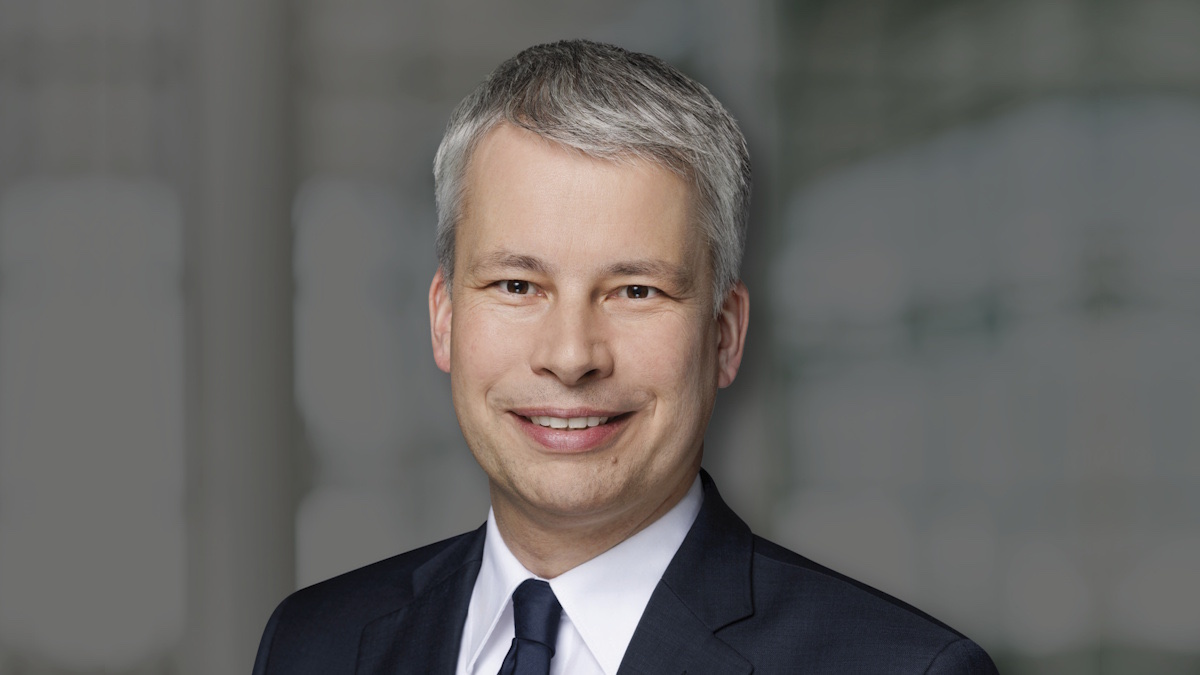
- Since 29 July 2026
- Federal Minister for Transport
- Ludwigsburg
- Directly elected constituency, won five times in a row
- 2009—
- Member of the German Bundestag
Section A — the subject
Transport is more than movement.
A motorway bridge closed for repairs, a regional train that does not arrive, a lorry that cannot reach a factory gate on time: these are infrastructure problems, but they show up as missed shifts, delayed deliveries and towns that feel further away than they are.
German transport policy covers the federal motorways and trunk roads, the federally owned rail network, the inland waterways and the funding that holds them together. It shapes whether a skilled worker can commute from a village, whether a medium-sized manufacturer can rely on its supply chain, and whether the country can cut emissions in a sector where, according to the Federal Environment Agency, they rose again in 2025. Infrastructure is also about resilience. More than half of the bridge structures on the Autobahn network were built before 1985, and about 4,000 of them are due for modernisation; long-distance trains reached their destinations on time in only 60.1% of cases in 2025.
Steffen Bilger has worked on these questions for much of his parliamentary career: first as a member of the transport committee, then inside the ministry as Parliamentary State Secretary from 2018 to 2021, and since July 2026 as the minister responsible. This site follows that path. It sets out what is documented, how the federal government's responsibilities differ from those of the Länder and municipalities, and where his record is still being written.
Section B — the current office
Federal Minister for Transport
- In office since
- 29 July 2026
- Oath before the Bundestag
- 8 September 2026
- Predecessor
- Patrick Schnieder (CDU), minister from May 2025
- Ministry
- Bundesministerium für Verkehr (BMV), Berlin and Bonn
- Chancellor
- Friedrich Merz
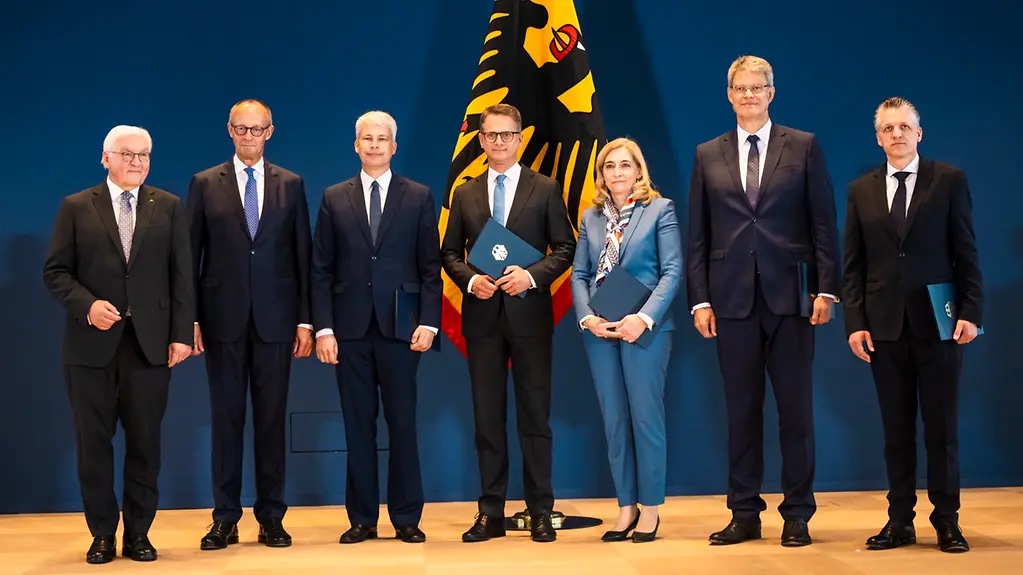
Federal President Frank-Walter Steinmeier appointed Steffen Bilger on 29 July 2026 as part of a cabinet reshuffle that also brought Carsten Linnemann to the Health Ministry and Nina Warken to the Federal Chancellery. Patrick Schnieder handed over the ministry the same day.
The Federal Ministry for Transport is responsible for the transport infrastructure owned by the federal government: 13,210 kilometres of Autobahn and 37,746 kilometres of federal roads (2025 figures), the federal trunk roads, the rail network of the federally owned Deutsche Bahn, and the federal inland waterways. It sets the legal framework for road, rail, air and water transport, supervises agencies such as the Federal Railway Authority and the Federal Motor Transport Authority, and owns Die Autobahn GmbH des Bundes, the company that has planned, built and run the motorways since 2021. Since May 2025 digital infrastructure has belonged to a separate ministry, so the department Bilger leads is a transport ministry in the narrower sense.
Local buses, trams and regional rail services are organised by the Länder and municipalities, though the federal government funds much of them. Bilger's role is therefore partly direct responsibility and partly money, law and negotiation. On taking office he set out his aim in one line: Verkehrsinfrastruktur muss für die Menschen da sein
("transport infrastructure must serve people", translation). In his first budget speech on 8 September 2026 he named the rail system's reliability and a new way of financing the motorways as early priorities.
Career snapshot
From Schongau to the Invalidenstraße
Eight stations on one line. The full chronology, with sources, is on the timeline.
- 1979Born in Schongau16 February, in Upper Bavaria. He later took his Abitur in Backnang, Württemberg.
- 1999–2004Law at TübingenFirst State Examination in 2004, after civilian service.
- 2006–2009Lawyer in the energy sectorSecond State Examination in 2006, then MVV Energiedienstleistungen, Mannheim.
- 2009Elected to the BundestagDirect mandate for Ludwigsburg with 39.9% of first votes.
- 2018–2021Parliamentary State SecretaryFederal Ministry of Transport and Digital Infrastructure.
- 2021–2025Deputy group chairDeputy Chair of the CDU/CSU parliamentary group in opposition.
- 2025–2026First Parliamentary SecretaryManaging the largest parliamentary group in the governing coalition.
- 2026Federal Minister for TransportAppointed 29 July, sworn in before the Bundestag on 8 September.
Early ministerial focus
Current priorities
These are stated priorities from his first weeks in office, taken from the handover on 29 July and the budget debate on 8 September 2026. They describe intentions, not completed results.
Infrastructure
Roads, bridges and long-term infrastructure quality, including a draft law that would let the federal motorway company borrow money.
Rail
Reliability, capacity and modernisation, with renovated corridors that must "function noticeably better" afterwards.
Mobility
Connecting people, communities and economic centres, using every mode of transport where it is strongest.
Logistics
Supporting the supply chains of an export economy across road, rail and inland waterways.
Digitalisation
Modernising transport systems and the processes behind planning and approval.
Safety
Protecting passengers and the people who work in Germany's transport system.
Constituency
Ludwigsburg, Baden-Württemberg
Ludwigsburg lies just north of Stuttgart, in a district where vehicle manufacturing and engineering are among the largest employers. Bilger has won its direct mandate in every Bundestag election since 2009.
Federal constituency 265 combines the baroque city of Ludwigsburg with neighbouring towns. It sits among Stuttgart's S-Bahn lines and the A 81 motorway, and employers in the constituency include the filter maker Mann+Hummel in Ludwigsburg, a Bosch development site in Schwieberdingen and the Porsche development centre in Weissach. Commuting, congestion and the future of the car industry are everyday local issues here.
Germany's electoral system combines constituency seats and party lists. A direct mandate means winning the most first votes in one constituency. Bilger won 50.4% in 2013, his best result, and 36.5% in 2025 in a more fragmented party landscape.
The Ludwigsburg sheetLatest political activity
On the record
Verified recent developments, with dates. Each item links to the sheet that explains it.
- Roads
Cabinet approves new Autobahn financing
The federal motorway company is to gain limited borrowing capacity from 2027 and a share of truck-toll revenue from 2028, while remaining wholly federally owned.
Infrastructure investment - Public transport
Deutschlandticket price set for 2027
Federal and state transport ministers set the price at €66.80 a month from January 2027. Bilger called it "still a very attractive offer"; consumer groups criticised the rise.
Public transport - Rail
"Not at all satisfied" with corridor renovations
In an interview with Der Spiegel, Bilger said planning had been far too slow and that lines closed for months must work better afterwards.
Rail infrastructure - Freight
Truck fast-charging network moves to delivery
At IAA Transportation in Hanover the ministry announced the start of a roughly €1 billion programme for about 4,200 charging points at around 350 Autobahn sites.
Freight transport - Bundestag
Oath of office and first budget speech
Bilger took the oath before Bundestag President Julia Klöckner, then presented the 2027 transport budget, linking rail managers' bonuses to punctuality targets.
Speeches - Rail freight
More support for single-wagon freight
An additional €84 million brought federal support for single-wagon rail freight in 2026 to €384 million.
Logistics - Safety
Assaults on rail staff: bodycam audio pilot
DB Regio recorded 989 assaults on staff in the first half of 2026. Bilger: safety on trains is "a basic precondition" for public transport.
Transport safety - Ministry
Appointment and handover
Federal President Steinmeier appointed Bilger at Bellevue Palace; Patrick Schnieder handed over the Federal Ministry for Transport the same day.
The ministerial role